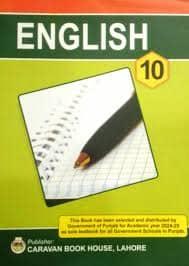
Class 10 English Notes for Punjab Board Exams (2026-2027)
Chapter-wise solved exercises, short questions, long questions, and MCQs from the official PCTB Class 10 English textbook. Prepared for SSC Part 2 students appearing in Punjab Board exams for the session 2026-2027.
Overview
These are chapter-wise solved notes for Class 10 English, based on the official textbook published by the Punjab Curriculum and Textbook Board (PCTB). The notes cover the complete syllabus for SSC Part 2 / Matric Part 2, including solved exercises, multiple choice questions (MCQs), short questions, and long questions for every chapter. Students preparing for Punjab Board exams – whether from Lahore, Rawalpindi, Faisalabad, Multan, Gujranwala, Bahawalpur, Sargodha, Sahiwal, or D.G. Khan boards – can use these notes to study the entire book systematically and revise key topics efficiently. Teachers may also find these notes helpful for classroom preparation and lesson planning.
Chapters List - Class 10 English (Punjab Board PCTB 2026-2027)
Prose Units
- Hazrat Muhammad (SAW) - Social Reforms for the Rights of Women, Orphans and Slaves
- My Beloved Pakistan (Poem)
- Digital Globalisation: Tranforming the English Language
- The Earth: Act Now for Tomorrow
- The Happy Prince
- Drug Abuse
- Time (Poem)
- Pollution-Free Pakistan with Greenery All Around
- The Road Not Taken (Poem)
- The Three Questions
Grammar Section
- Meanings of Unknown Words/ Context Clues/ Exploring Idioms and Proverbs
- Word Family Detective/ Inferred Meanings of Unfamiliar Words
- Adjectival, Prepositional, and Adverbal Phrases/ Cannotative and Denotative Meanings of Words/ Figurative Language, Word Relationships and Nuances in Word Meanings
- Figures of speech
- Matter of Understanding Precisely/ Compound Prepositions
- Use of Conjunctions and Transitional Devices
- Capitalization/ Punctuation/ Spelling
- Punctuation and capitalization/ Understand Tenses
- Contructing sentences using sentence patterns and structures/ Constructing complex sentences and paragraphs
- Practice Direct and Indirect Narration